Vedas

- 4 vedas in marathi pdf download. Purana books, read atharva veda in hindi online, rig veda in hindi pdf, rigveda in hindi, sama veda in hindi.
- Sama-Veda “Knowledge of the Melodies” 3. Yajur-Veda “Knowledge of the Sacrificial formulas” 4. Atharva-Veda “Knowledge of the Magic formulas” ancient.eu.com 6. The RIG-VEDA “Wisdom of the Verses” Rig Veda consists of 10,552 verses (collected into 10 books) of hymns and mantras used by the hotri priests.
Vedas are referred to as “Super books”, as these books contain knowledge on every subject, whether it be science, math, astrology, physics, etc. The points which are written in Vedas are even true in today’s world as well.
The Vedas are perhaps the oldest written text on our planet today. They date back to the beginning of Indian civilization and are the earliestliterary records of the whole Aryan race. They are supposed to have been passed through oral tradition for over 100,000 years. They came to us in written form between 4-6,000 years ago.
The Vedas are divided into four groups, Rigveda, Yajurveda, Samaveda and Atharvaveda. Each group has an original text (Mantra) and a commentary portion (Brahmana).
The Brahmana again has two portions, one interpreting ritual and the other the philosophy. The portions interpreting the philosophy of the original texts constitute the Upanishads.
There are also auxiliary texts called Vedangas. Vedic literature refers to the whole of this vast group of literature. The whole of Rgveda and most of Atharvaveda are in the form of poetry, or hymns to the deities and the elements.
Samaveda is in verses that are to be sung and Yajurveda is largely in short prose passages. Both Samaveda and Yajurveda are concerned with rituals rather than philosophy - especially Yajurveda.
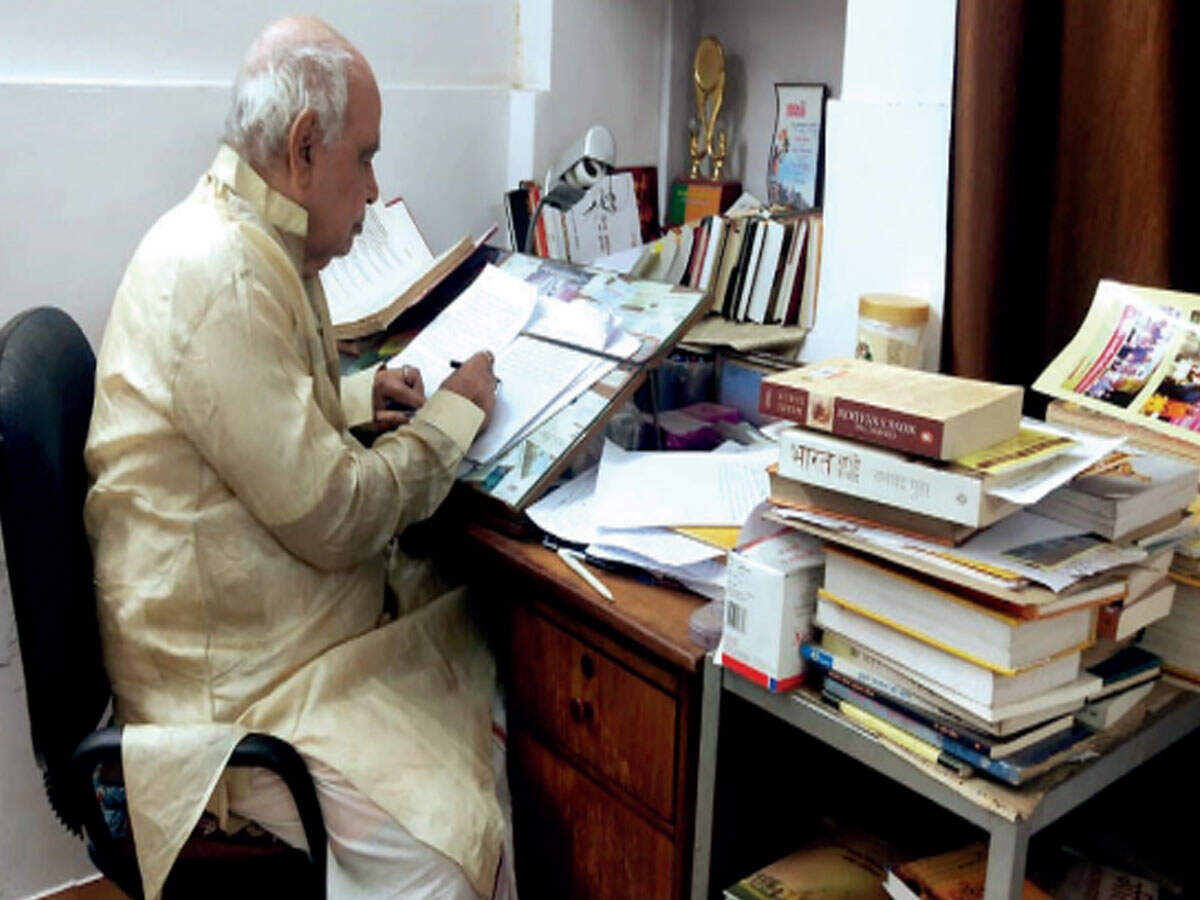
Rigveda
The Rig-Veda Samhita is the oldest significant extant Indian text. It is a collection of 1,028 Vedic Sanskrit hymns and 10,600 verses in all, organized into ten books (Sanskrit: mandalas). The hymns are dedicated to Rigvedic deities. The books were composed by sages and poets from different priestly groups over a period of at least 500 years, which Avari dates as 1400 BCE to 900 BCE, if not earlier According to Max Muller, based on internal evidence (philological and linguistic), the Rigveda was composed roughly between 1700-1100 BCE (the early Vedic period) in the Punjab (Sapta Sindhu) region of the Indian subcontinent. Michael Witzel believes that the Rig Veda must have been composed more or less in the period 1450-1350 BCE. There are strong linguistic and cultural similarities between the Rigveda and the early Iranian Avesta, deriving from the Proto-Indo-Iranian times, often associated with the Andronovo culture; the earliest horse-drawn chariots were found at Andronovo sites in the Sintashta-Petrovka cultural area near the Ural mountains and date to ca. 2000 BCE.
Rigveda means the Veda of Adoration and mostly contains verses adoring or adulating deities. But it also dealt with other subjects, like the procedure of wedding, the folly of gambling. About two-thirds of Rigveda is about the gods Agni (Fire) and Indra (Ruler of the gods). Other Rigvedic gods include Rudra, the two Ashvins,Savitar and Surya, Varuna, the Maruts and the Ribhus. There are references to a divine creeper, the Soma, whose juice was an energizer. Some animals like horses, some rivers, and even some implements (like mortar and pestle) were deified. Rigveda contains a sense of intimate communion between Nature and the Rishis or visionaries. According to some, the concerns of Rigveda are those of simple, nomadic, pastoral Aryans. According to others, the people in the times of the Rigveda had a settled home, definite mode of life, developed social customs, political organizations, and even arts and amusements. Rigveda is the oldest, largest and most important of the Vedas, containing ten thousand verses forming 1017 poems in 20 groups.
Yajurveda
The Yajur-Veda ('Veda of sacrificial formulas') consists of archaic prose mantras and also in part of verses borrowed from the Rig-Veda. Its purpose was practical, in that each mantra must accompany an action in sacrifice but, unlike the Sama-Veda, it was compiled to apply to all sacrificial rites, not merely the Soma offering. There are two major recensions of this Veda known as the 'Black' and 'White' Yajur-Veda. The origin and meaning of these designations are not very clear. The White Yajur-Veda contains only the verses and sayings necessary for the sacrifice, while explanations exist in a separate Brahmana work. It differs widely from the Black Yajurveda, which incorporates such explanations in the work itself, often immediately following the verses. Of the Black Yajurveda four major recensions survive, all showing by and large the same arrangement, but differing in many other respects, notably in the individual discussion of the rituals but also in matters of phonology and accent.
Yajurveda refers to acts of worship such as oblations made into Agni or Fire. It has two branches, Krishna or Black and Shukla or White. While both contain mantras or incantations to be chanted at rituals, Black Yajurveda also has many explanations. The recensions of Black Yajurveda are Taittirya, Katthaka, Maitrayani and Kapishtthala. Those of White Yajurveda are Madhyanadina and Kanva. The literary value of Yajurveda is mostly for its prose, which consists of short terse sentences full of meaning and cadence.
4 Vedas Books Online
Samveda
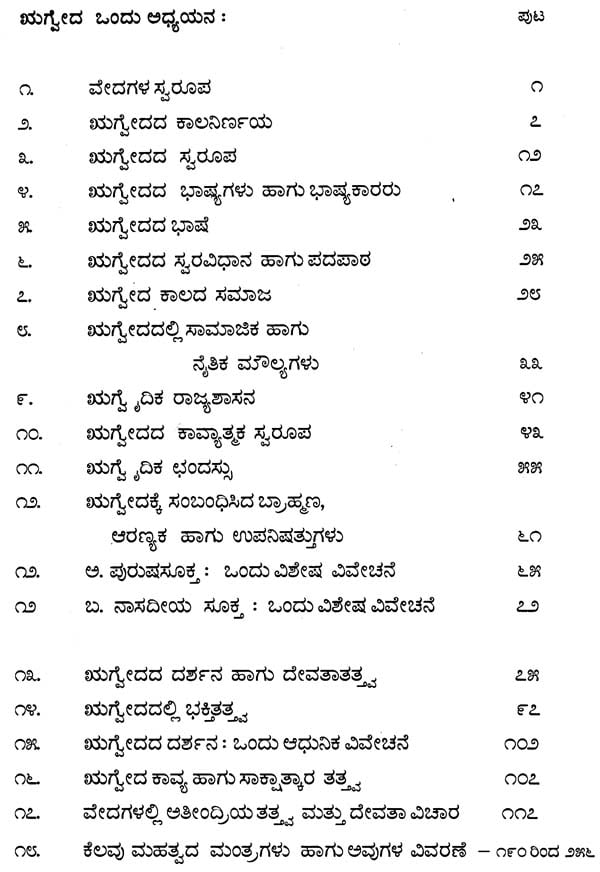
The Sama-Veda is the 'Veda of chants' or 'Knowledge of melodies'. The name of this Veda is from the Sanskrit word saman which means a metrical hymn or song of praise. It consists of 1549 stanzas, taken entirely (except 78) from the Rig-Veda. Some of the Rig-Veda verses are repeated more than once. Including repetitions, there are a total of 1875 verses numbered in the Sama-Veda recension published by Griffith. Two major recensions remain today, the Kauthuma/Ranayaniya and the Jaiminiya.P>Its purpose was liturgical and practical, to serve as a songbook for the 'singer' priests who took part in the liturgy. A priest who sings hymns from the Sama-Veda during a ritual is called an udgat, a word derived from the Sanskrit root ud-gai ('to sing' or 'to chant'). A similar word in English might be 'cantor'. The styles of chanting are important to the liturgical use of the verses. The hymns were to be sung according to certain fixed melodies; hence the name of the collection.
Samaveda consists of a selection of poetry mainly from the Rigveda, and some original matter. It has two parts, Purva-Archika (First Adoratona) and Uttar-Archika (Later Adoration), containing verses addressed to the three gods Agni (Fire), Indra (King of Gods) and Soma (Energizing Herb). The verses are not to be chanted anyhow, but to be sung in specifically indicated melodies using the seven svaras or notes. Such songs are called Samagana and in this sense Samaveda is really a book of hymns.
Atharvaveda
Atharvaveda means the Veda of the Wise and the Old. It is associated with the name of the ancient poet Atharvan (The Wise Old One). It is also called Atharva-Angirasa, being associated with the name of another rishi, Angiras. Although later in age, the Atharvaveda reveals a more primitive culture than the Rigveda. The custom is to enumerate Yajurveda and Samaveda after the Rigveda, and mention Atharvaveda last. Atharvaveda contains about 6 thousand verses forming 731 poems and a small portion in prose. About one seventh of the Atharvaveda text is common to the Rigveda.
Atharvaveda contains first class poetry coming from visionary poets, much of it being glorification of the curative powers of herbs and waters. Many poems relate to diseases like cough and jaundice, to male and female demons that cause diseases, to sweet-smelling herbs and magic amulets, which drive diseases away. There are poems relating to sins and their atonement, errors in performing rituals and their expiatory acts, political and philosophical issues, and a wonderful hymn to Prithvi or Mother Earth.
Vedas Wikipedia
Vimanas or space ships
Upanishads
The Upanishads are regarded as part of the Vedas and as such form part of the Hindu scriptures. They primarily discuss philosophy, meditation, and the nature of God; they form the core spiritual thought of Vedantic Hinduism. Considered as mystic or spiritual contemplations of the Vedas, their putative end and essence, the Upanishads are known as Vedanta ('the end/culmination of the Vedas'). The Upanishads do not belong to a particular period of Sanskrit literature. The oldest, such as the Brhadaranyaka and Chandogya Upanishads, may date to the Brahmana period (roughly before the 31st century BC; before Gita was constructed), while the youngest, depending on the canon used, may date to the medieval or early modern period.
The word Upanishad comes from the Sanskrit verb sad (to sit) and the two prepositions upa and ni (under and at). They are sacred tests of spiritual and philosophical nature. Vedic literature is divided into karmakanda containingSamhitas (hymns) and Brahmanas (commentaries), and gyanakanda containing knowledge in the form of the Aranyakas and Upanishads. Thus each Upanishad is associated with a Veda, Isha-upanishad with Shukla Yajurveda, Kena-upanishad with Samaveda, and so on.
The earliest Upanishads may have been composed between B.C. 800 and 400.There have been several later additions, leading to 112 Upanishads being available today. But the major Upanishads are ten, Isha, Kena, Kattha, Prashna, Mundaka, Mandukya, Taittiriya, Aitareya, Shwetashwatara, Chhandogya and Brihadaryanyaka. The teachings of the Upanishads, and those of the Bhagavat Gita, form the basis of the Vedanta philosophy.
The Isha-upanishad emphasizes the identity of the human soul with the divine soul. The Kena-upanishad discusses the qualities of the divine essence (Brahman) and the relationship of the gods to the divine essence. The Katha-upanishad, through the story of Nachiketa, discussed death and the permanence of the soul (Atman). The fairly longChhandogya-upanishad develops the idea of transmigration of souls. The rihadaryanaka -upanishad, the longest of the Upanishads, bears the message of the completeness of the divine essence, and the associated peace. As literary remnants of the ancient past, the Upanishads - both lucid and elegant - have great literary value.
HINDUISM
SACRED TEXTS INDEX
INDIA INDEX
ANCIENT CIVILIZATIONS INDEX
ALPHABETICAL INDEX
CRYSTALINKS HOME PAGE
PSYCHIC READING WITH ELLIE
2012 THE ALCHEMY OF TIME
4 Vedas Books Publishers
Key Points
- The Vedas, meaning “knowledge,” are the oldest texts of Hinduism.
- They are derived from the ancient Indo-Aryan culture of the Indian Subcontinent and began as an oral tradition that was passed down through generations before finally being written in Vedic Sanskrit between 1500 and 500 BCE (Before Common Era).
- The Vedas are structured in four different collections containing hymns, poems, prayers, and religious instruction.
- The Indian caste system is based on a fable from the Vedas about the sacrifice of the deity Purusha.
Terms
Rig Veda
The oldest and most important of the four Vedas.
Caste System
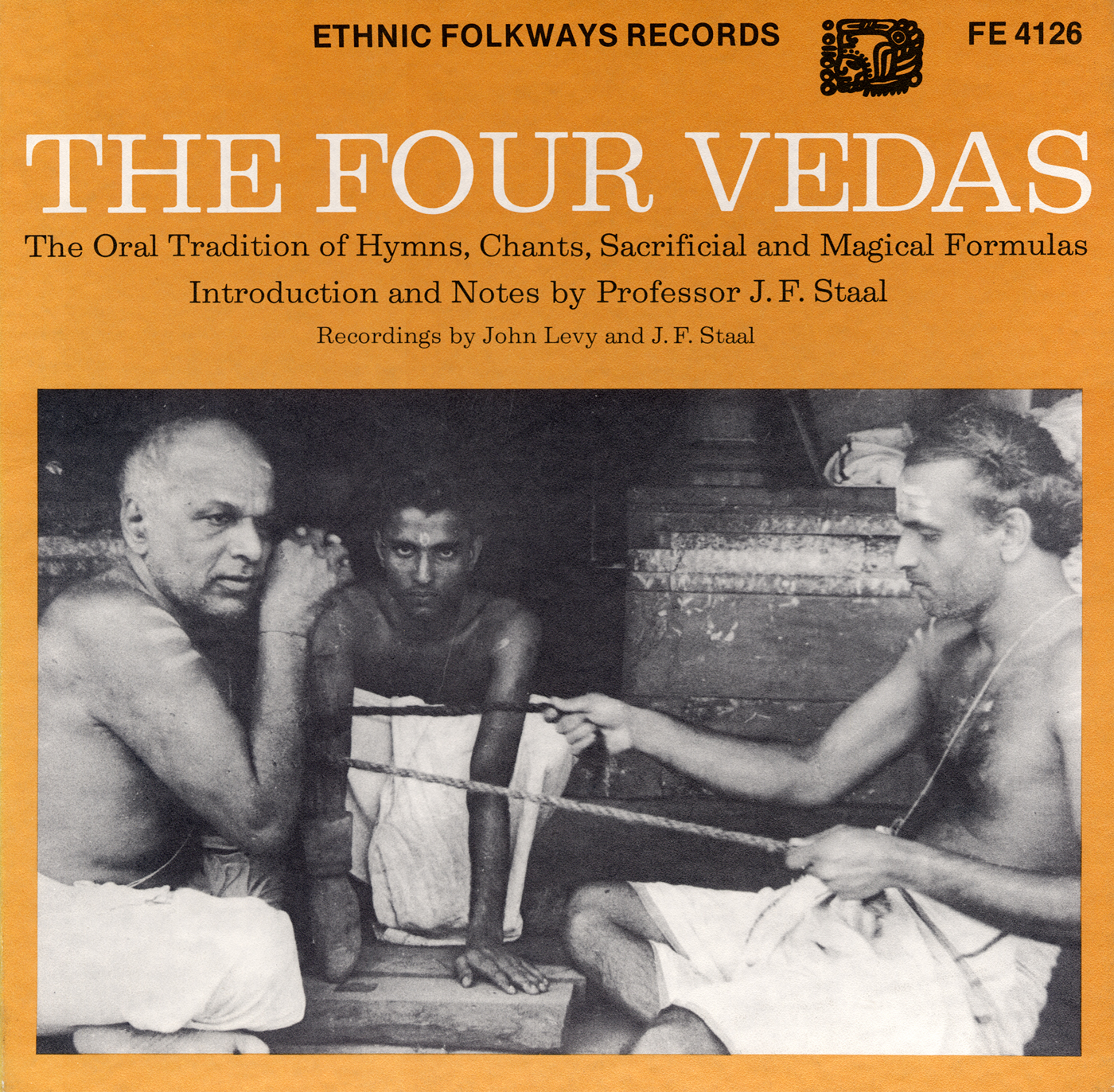
4 Vedas Books
An ancient social structure based upon one of the fables in the Vedas, castes persist in modern India.
Vedas
The oldest scriptures of Hinduism, originally passed down orally but then written in Vedic Sanskrit between 1500 and 500 BCE.
Hinduism
A major world religion that began on the Indian Subcontinent.

The Indo-Aryan Vedas remain the oldest scriptures of Hinduism, which is considered one of the oldest religions in the world. Vedic ritualism, a composite of ancient Indo-Aryan and Harappan culture, contributed to the deities and traditions of Hinduism over time. The Vedas are split into four major texts and contain hymns, mythological accounts, poems, prayers, and formulas considered sacred to the Vedic religion.
Vedas, meaning “knowledge,” were written in Vedic Sanskrit between 1500 and 500 BCE in the northwestern region the Indian Subcontinent. The Vedas were transmitted orally during the course of numerous subsequent generations before finally being archived in written form. Not much is known about the authors of the Vedas, as the focus is placed on the ideas found in Vedic tradition rather than those who originated the ideas. The oldest of the texts is the Rig Veda, and while it is not possible to establish precise dates for each of the ancient texts, it is believed the collection was completed by the end of the 2nd millennium BCE (Before Common Era).
4 Vedas Books In Hindi
There are four Indo-Aryan Vedas: the Rig Veda contains hymns about their mythology; the Sama Veda consists mainly of hymns about religious rituals; the Yajur Veda contains instructions for religious rituals; and the Atharva Veda consists of spells against enemies, sorcerers, and diseases. (Depending on the source consulted, these are spelled, for example, either Rig Veda or Rigveda.)
The Rig Veda is the largest and considered the most important of the collection, containing 1,028 hymns divided into 10 books called mandalas. The verses of the Sam Veda are taken almost completely from the Rig Veda, but arranged differently so they may be chanted. The Yajur Veda is divided into the White and Black halves and contains prose commentaries on how religious and sacrifices should be performed. The Atharva Veda includes charms and magic incantations written in the style of folklore.
Each Veda was further divided in two sections: the Brahmanas, instructions for religious rituals, and the Samhitas, mantras or hymns in praise of various deities. Modern linguists consider the metrical hymns of the Rigveda Samhita, the most ancient layer of text in the Vedas, to have been composed by many authors over several centuries of oral tradition.
Although the focus of the Vedas is on the message rather than the messengers, such as Buddha or Jesus Christ in their respective religions, the Vedic religion still held gods in high regard.
The Aryan pantheon of gods is described in great detail in the Rig Veda. However, the religious practices and deities are not uniformly consistent in these sacred texts, probably because the Aryans themselves were not a homogenous group. While spreading through the Indian Subcontinent, it is probable that their initial religious beliefs and practices were shaped by the absorption of local religious traditions.
According to the hymns of the Rig Veda, the most important deities were Agni, the god of Fire, intermediary between the gods and humans; Indra, the god of Heavens and War, protector of the Aryans against their enemies; Surya, the Sun god; Vayu, the god of Wind; and Prthivi, the goddess of Earth.
The Caste System, or groups based on birth or employment status, has been part of the social fabric of the Indian Subcontinent since ancient times. The castes are thought to have derived from a hymn found in the Vedas to the deity Purusha, who is believed to have been sacrificed by the other gods. Afterward Purusha’s mind became the Moon, his eyes became the Sun, his head the Sky, and his feet the Earth.
4 Vedas Books Review
The passage describing the classes of people derived from the sacrifice of Purusha is the first indication of a caste system. The Brahmins, or priests, came from Purusha’s mouth; the Kshatriyas, or warrior rulers, came from Purusha’s arms; the Vaishyas, or commoners such as landowners and merchants, came from Purusha’s thighs; and the Shudras, or laborers and servants, came from Purusha’s feet.
Today the castes still exist in the form of varna, or class system, based on the original four castes described in the Vedas. A fifth group known as Dalits, historically excluded from the varna system, are ostracized and called untouchables. The caste system as it exists today is thought to be a product of developments following the collapse of British colonial rule in India. The system is frowned upon by many people in Indian society and was a focus of social justice campaigns during the 20th century by prominent progressive activists such as B. R. Ambedkar, an architect of the Indian Constitution, and Mahatma Gandhi, the revered leader of the nonviolent Indian independence movement.